Virginia Tidewater Map
Virginia’s Tidewater region sits low and flat. Our map of the Virginia Tidewater shows where rivers meet the Chesapeake Bay on the east.
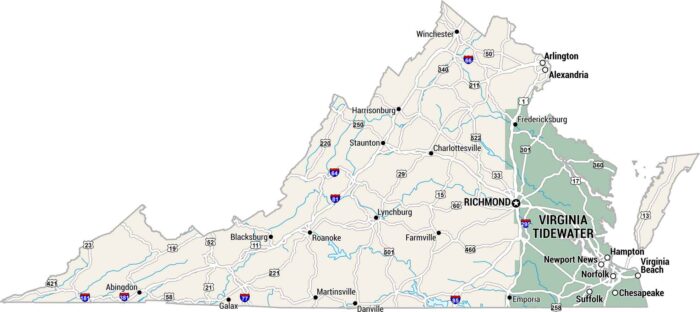
Virginia’s Tidewater region sits low and flat. Our map of the Virginia Tidewater shows where rivers meet the Chesapeake Bay on the east.
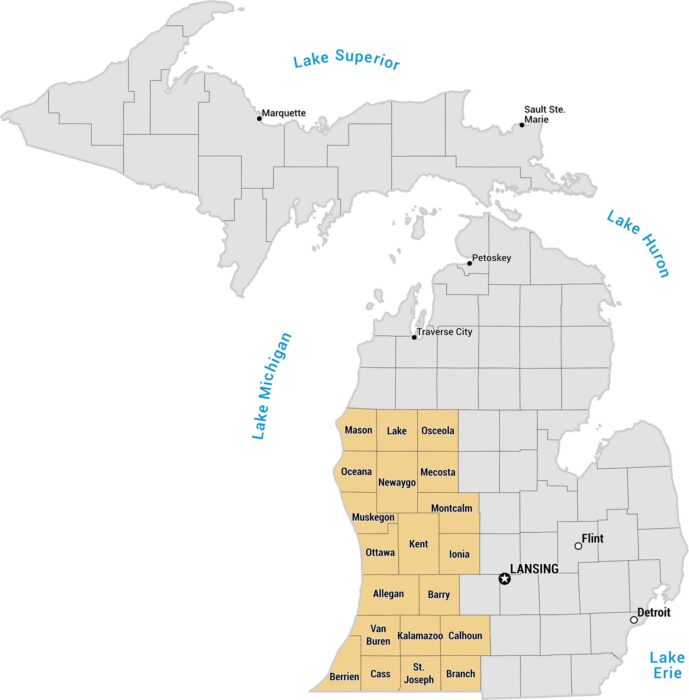
West Michigan is a region that stretch along Lake Michigan. Grand Rapids anchors the region, with Holland, Muskegon, and Saugatuck.
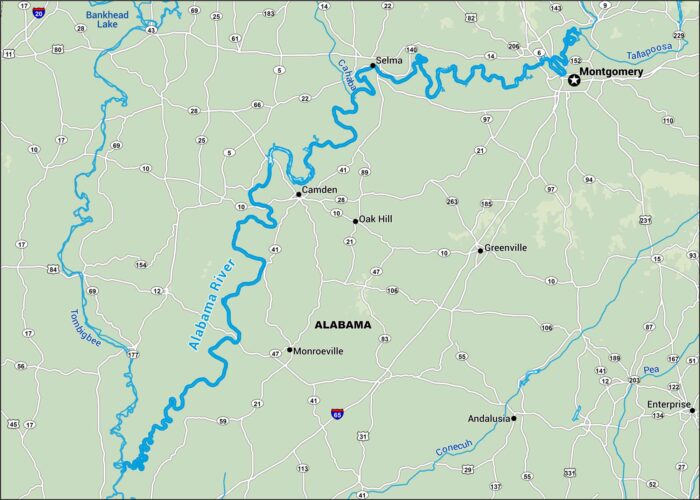
The Alabama River bends through rolling hills and towns. Our map follows its broad path south. It’s calm water with a deep sense of history.

Georgia’s Altamaha runs through thick coastal forest. Use our map to get acquainted to its quiet oxbows and long drift toward the Atlantic.
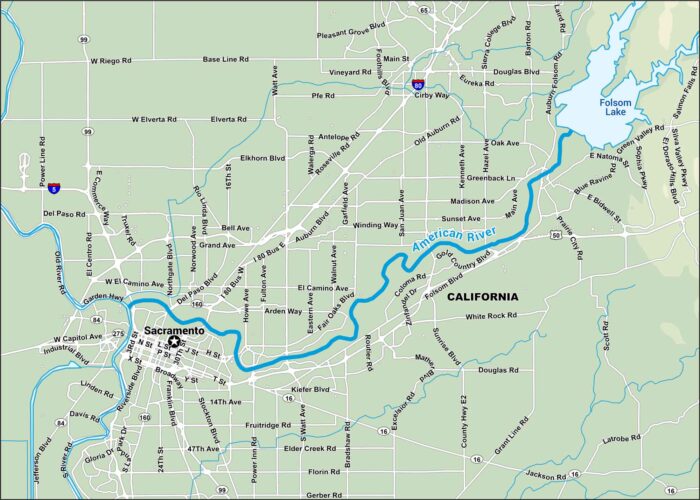
Start where gold fever began. The American River cuts through the Sierra foothills toward Sacramento. It’s lined with trails and rapids.
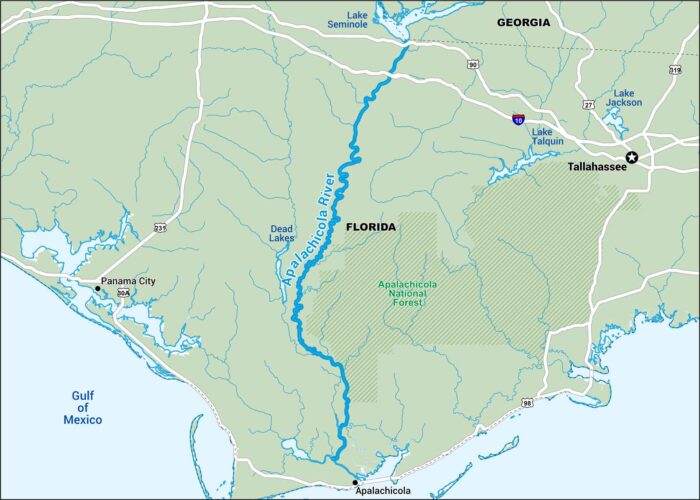
Down in Florida, the Apalachicola moves slow and wide. This map follows it through swamps and more. It ends at the City of Apalachicola.
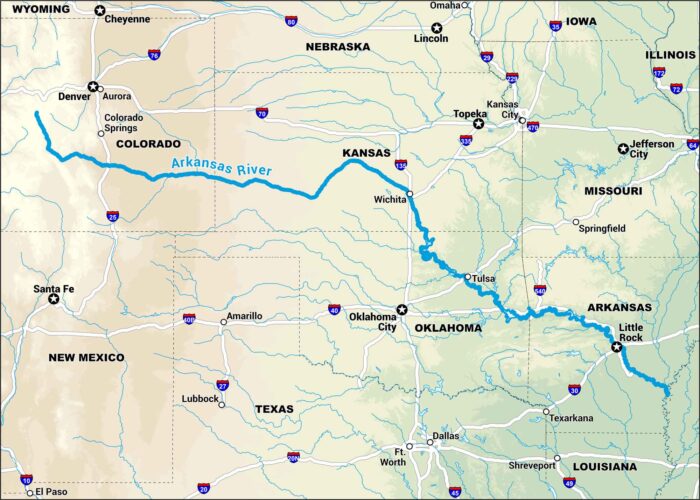
The Arkansas starts high in the Rockies and rolls all the way to the plains. Our map tracks it through canyons, farmland, and cities.

Michigan’s Au Sable drifts through pine forest and small towns. It’s steady and calm. Follow the map to find launch points, camp spots, etc.
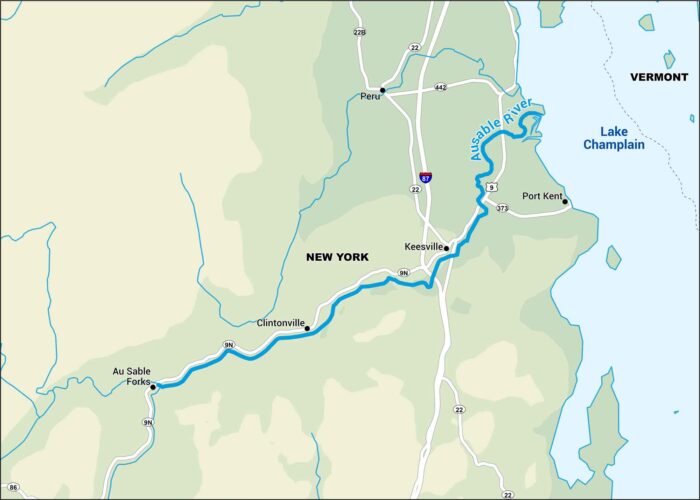
Cold water, tight turns, and the Adirondacks rising close around it. It doesn’t get any sweeter than this. See our map of the Ausable River.
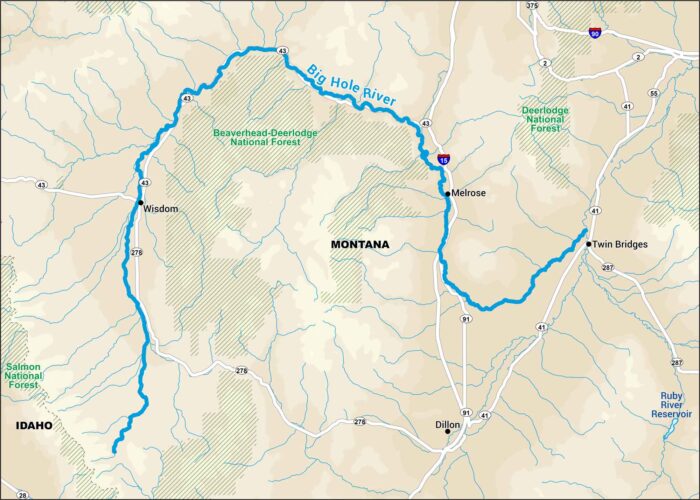
Montana’s Big Hole has broad valleys, wide water, open sky. It’s near Beaverhead-Deerlodge National Forest, perfect to set up a campsite.
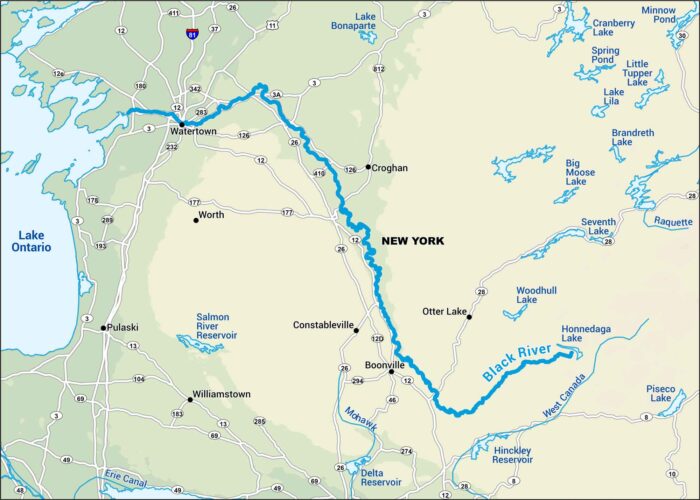
Wade in. The Black River drifts through woods and farmland, quiet and slow. You’ll find on our map highways and small towns that sit close.

The Blackfoot runs clean through western Montana. Our map shows the bends and stretches where the water runs through national forests.
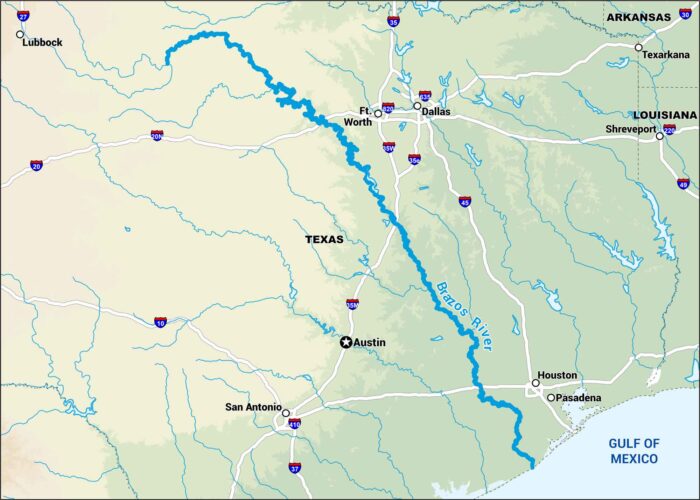
They call it the “Arms of Texas” because it stretches like one. It’s wide and wandering from the Hill Country down to the Gulf.
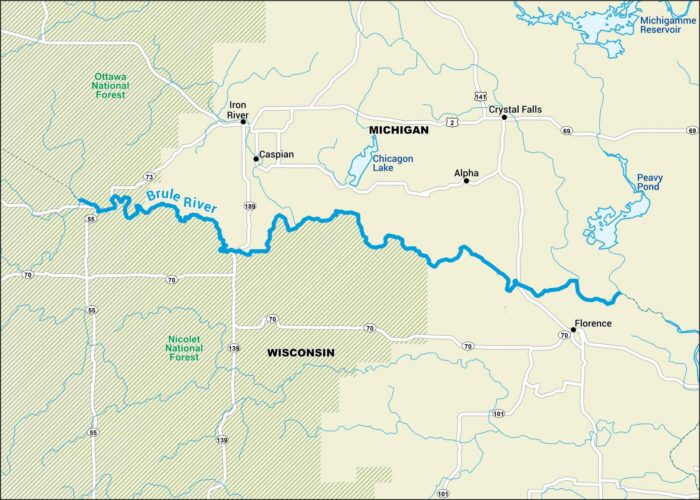
Paddle the Brule. It’s cold, fast, and covered by pine and birch. This map points out nearby highways, rivers and national forests.
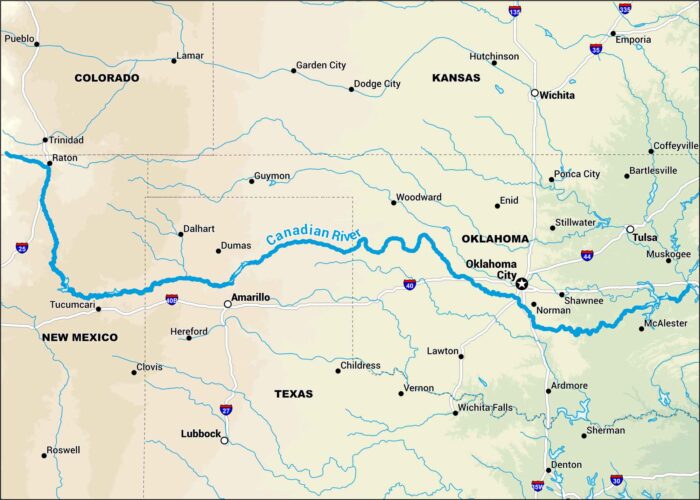
Don’t look north to Canada for the Canadian River. Our map shows the one that spans New Mexico, Texas and Oklahoma.