
US Election 1916 Map
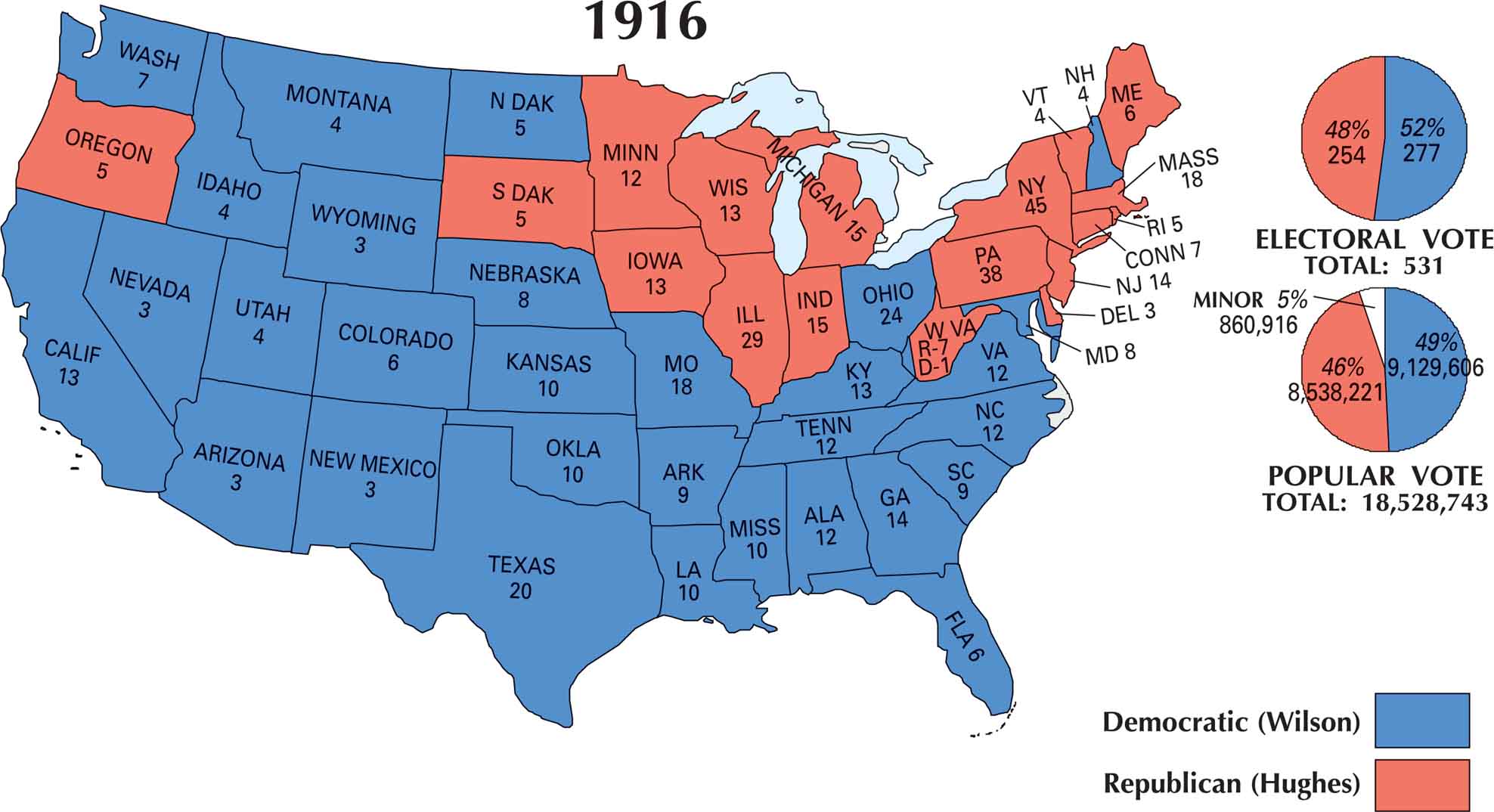
The 1916 map is mostly blue, showing Woodrow Wilson’s Democratic strength. He won re-election by carrying the South, Midwest, and much of the West. The Northeast is patchy, with Republican Charles Evans Hughes winning a few states. But the Democratic Party dominates this US election 1916 map
Map Information
US Election Maps
Click on a map below to check out the US election map and results.

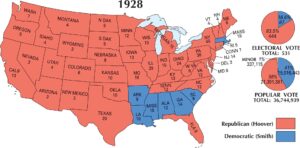
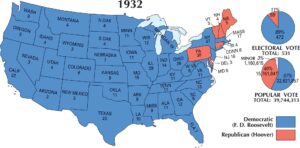
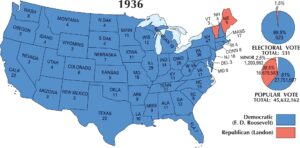
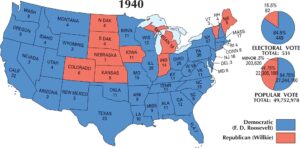
On the Map
The election of 1916 saw a highly competitive race where Woodrow Wilson (Democrat) secured a second term by defeating Charles Evans Hughes (Republican). The map shows a sharp geographic divide. Wilson swept the South and the West, while Hughes dominated the Northeast and industrial Midwest.
States and Electoral Votes
|
State |
Total Votes |
Wilson (D) |
Hughes (R) |
|
New York |
45 |
0 |
45 |
|
Pennsylvania |
38 |
0 |
38 |
|
Illinois |
29 |
0 |
29 |
|
Ohio |
24 |
24 |
0 |
|
Texas |
20 |
20 |
0 |
|
Massachusetts |
18 |
0 |
18 |
|
Missouri |
18 |
18 |
0 |
|
Michigan |
15 |
0 |
15 |
|
Indiana |
15 |
0 |
15 |
|
Georgia |
14 |
14 |
0 |
|
New Jersey |
14 |
0 |
14 |
|
Wisconsin |
13 |
0 |
13 |
|
Kentucky |
13 |
13 |
0 |
|
California |
13 |
13 |
0 |
|
Virginia |
12 |
12 |
0 |
|
Tennessee |
12 |
12 |
0 |
|
North Carolina |
12 |
12 |
0 |
|
Alabama |
12 |
12 |
0 |
|
Minnesota |
12 |
0 |
12 |
|
Kansas |
10 |
10 |
0 |
|
Oklahoma |
10 |
10 |
0 |
|
Mississippi |
10 |
10 |
0 |
|
Louisiana |
10 |
10 |
0 |
|
Arkansas |
9 |
9 |
0 |
|
South Carolina |
9 |
9 |
0 |
|
Maryland |
8 |
8 |
0 |
|
West Virginia |
8 |
1 |
7 |
|
Nebraska |
8 |
8 |
0 |
|
Washington |
7 |
7 |
0 |
|
Connecticut |
7 |
0 |
7 |
|
Maine |
6 |
0 |
6 |
|
Colorado |
6 |
6 |
0 |
|
Florida |
6 |
6 |
0 |
|
Oregon |
5 |
0 |
5 |
|
South Dakota |
5 |
0 |
5 |
|
North Dakota |
5 |
5 |
0 |
|
Rhode Island |
5 |
0 |
5 |
|
New Hampshire |
4 |
4 |
0 |
|
Vermont |
4 |
0 |
4 |
|
Utah |
4 |
4 |
0 |
|
Montana |
4 |
4 |
0 |
|
Idaho |
4 |
4 |
0 |
|
Arizona |
3 |
3 |
0 |
|
New Mexico |
3 |
3 |
0 |
|
Wyoming |
3 |
3 |
0 |
|
Nevada |
3 |
3 |
0 |
|
Delaware |
3 |
0 |
3 |
Election Summary
- The Winner: Woodrow Wilson (Democrat) won a second term with 277 electoral votes.
- The Challenger: Charles Evans Hughes (Republican) received 254 electoral votes in one of the closest elections in U.S. history.
- Popular Vote: Wilson won 49% of the vote (9,129,606) to Hughes’ 46% (8,538,221).
- The “He Kept Us Out of War” Campaign: Wilson’s narrow victory was largely attributed to his campaign’s emphasis on neutrality during the early years of World War I.
- Electoral Split: West Virginia had a rare split, with Wilson receiving 1 electoral vote and Hughes receiving 7.
- Minor Parties: Captured 5% of the popular vote (860,916 total), though they received no electoral votes.